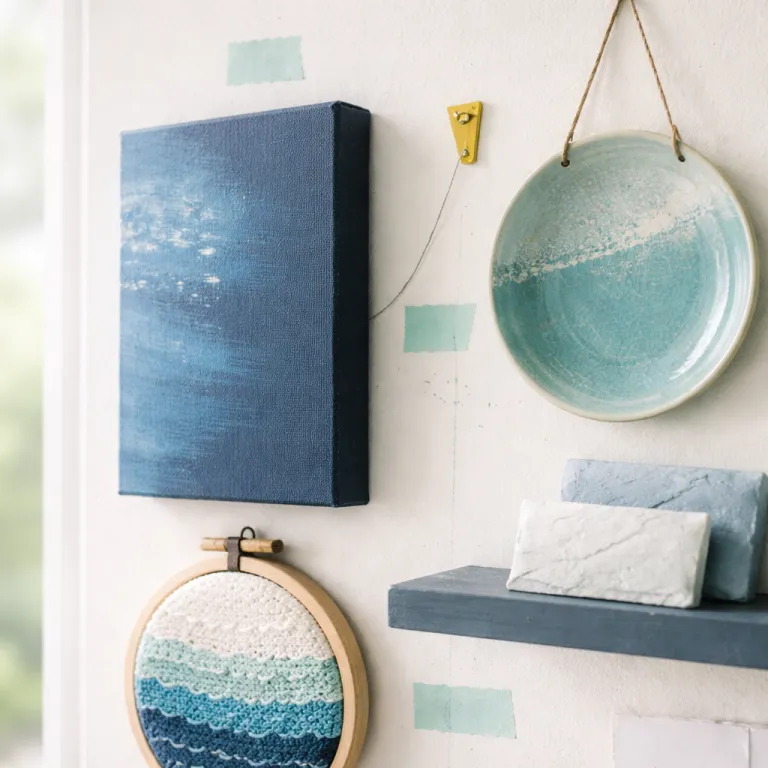
Planning a wall for hanging mixed media artwork
Luxury interiors fail when hanging mixed media artwork is treated as an afterthought. A heavily textured art piece, a silver gelatin photograph, and a textile relief will fight on the same wall unless you plan the wall layout as rigorously as the furniture plan. Think of the room as a single composition where every artwork, every frame, and even the blank wall between pieces carries weight.
Start by measuring from the finished floor in centimetres, not guessing from eye level in passing. The classic rule that the centre of wall art should sit around 145 centimetres from the floor (roughly 57 inches floor to centre) is only a baseline when you hang artwork that is flat and modest in scale, not a sculptural mixed media piece that projects several centimetres into the room. When you curate media pieces with deep relief, heavy materials, and layered photos or art prints, you often need to raise the centre line so the hanging artwork clears chair backs, consoles, and tall furniture.
Before you hang art, tape out every picture on the floor at full size, including the frame and any shadow gap. This mock layout lets you test how many pieces the walls can carry before the gallery wall turns into visual noise instead of a clear focal point. When you finally hang artwork, keep at least a hand span of blank wall between strong mixed media pieces so each artwork reads as a sentence, not a shout.
Balancing textures, weights, and heavy duty hardware
Mixed media has changed what a wall can hold, and the hardware must follow. A resin and metal artwork from a blue chip gallery can weigh as much as a small sculpture, so picture hanging with light hooks that were designed for paper photos or slim art prints is no longer acceptable. Treat every heavy piece as if it were a shelf, and specify hanging systems with a published heavy duty rating, not a guess from the installer.
On a gallery wall that mixes textile art, framed photos, and cast metal media pieces, vary depth as carefully as you vary colour. A single very heavy mixed media work can anchor the wall art as a focal point, while lighter pieces in slim frame profiles create visual balance around it and keep the walls from feeling top heavy. When you hang artwork above deep furniture such as a console or a headboard, leave at least 15 to 25 centimetres of breathing space so the hanging art does not visually merge with the furniture silhouette.
In a dining room or a hotel suite, I often place the heaviest hanging artwork closer to a structural corner, where the wall is strongest and the eye naturally expects weight. Use rail based hanging systems when you need flexibility for rotating art hanging schemes, especially in rooms where clients change media pieces seasonally. For more sculptural layouts, pair a relief artwork with a ceramic object on a nearby surface, using a refined ceramic flower bowl as a three dimensional echo of the wall piece to tie the composition together.
Rhythm, negative space, and the mixed media gallery wall
A wall of hanging mixed media artwork should read like a short paragraph, not a run on sentence. When you build gallery walls that combine painting, photography, and object based media, the temptation is to fill every centimetre, but luxury rooms need negative space as much as they need art. The blank wall between pieces is not wasted area ; it is the silence that lets each artwork speak.
For a three metre wall, start by choosing one clear focal point, usually the most sculptural or chromatically intense mixed media piece. Place that artwork slightly off centre, then build out with smaller pieces and quieter photos, keeping at least eight to twelve centimetres between frames to maintain visual balance and avoid a cluttered gallery wall effect that fights with the room. When you hang art above a sofa or a credenza, aim for the lower edge of the main picture to sit about 20 to 30 centimetres above the furniture, so the wall art feels connected to the seating group rather than floating away.
Raking light that makes an impasto painting sing will often destroy a glossy photograph, so plan lighting for gallery walls as carefully as you plan the wall layout. Use adjustable spots with a warm white colour temperature to graze textured mixed media, while keeping photographs and delicate media pieces in softer, more diffuse beams. If you are pairing stained glass wall art with dense collage, keep the luminous glass slightly apart so its glow does not overpower the subtler surfaces nearby.
When to ignore the 145 centimetre rule
Designers repeat the 145 centimetre eye level rule as if it were law, but hanging mixed media artwork often demands a different centre line. In a room with high ceilings, tall windows, and substantial furniture, a strict 145 centimetre centre can drag the visual weight too low and make the walls feel squat. When you hang artwork that is tall or that includes heavy sculptural materials, you sometimes need to lift the centre to around 155 to 160 centimetres to keep the composition in proportion with the architecture.
In a salon style gallery wall that climbs above a fireplace, the lowest picture can sit near the 145 centimetre mark while the upper pieces rise well beyond, creating a vertical rhythm that suits grand walls. The key is to keep the visual centre of the entire wall layout, not each individual artwork, roughly at comfortable eye level for the people who live with the room, which may differ from the average museum standard. When you hang art in a space used by both adults and children, such as a family room, consider a slightly lower band for photos and smaller art prints, with more robust mixed media pieces higher up and out of reach.
Over a bed or a deep sofa, the bottom of the frame often matters more than the centre height. Leave enough distance from the inches floor measurement to the mattress or cushion top so that the hanging art does not feel like it is pressing down on the occupants, especially when the artwork is heavy or projects from the wall. In staircases, forget a single number altogether and let the sequence of pieces follow the rise of the steps, keeping the centre of each picture roughly parallel to the handrail for a calm, continuous line.
Lighting, finishes, and living with mixed media walls
Lighting can make or break hanging mixed media artwork, particularly when glossy photos share a wall with matte collage and metallic leaf. Use track or recessed spots with narrow beams to skim textured art, and softer, wider beams for reflective media pieces so that hotspots do not appear in the middle of a cherished picture. A colour temperature around 2700 to 3000 Kelvin flatters most wall art, keeping skin tones in photos warm while letting metallic materials and pigments retain depth.
In a living room where the artwork must coexist with mirrors, lamps, and reflective furniture, test every light angle before finalising the hang. Stand at each main seating position and check whether any hanging art catches a harsh reflection or throws a distracting shadow onto neighbouring pieces, then adjust the fixtures or the wall layout until the gallery walls feel calm. When you hang artwork that includes delicate paper or textiles, avoid placing it in direct sunlight, and consider UV filtered glazing in the frame to protect the media over time.
For clients who rotate collections, specify discreet hanging systems that allow you to re hang art without scarring the walls every season. A well planned blank wall can wait gracefully for the next acquisition, rather than being filled with placeholder pieces that dilute the impact of the room. In the end, the luxury lies not in how many artworks you own, but in how precisely each piece earns its place on the wall.
FAQ about hanging mixed media artwork in luxury interiors
How high should I hang mixed media artwork above a sofa or console ?
For most luxury interiors, aim to hang artwork so that the bottom of the frame sits about 20 to 30 centimetres above the top of the sofa or console. This keeps the wall art visually connected to the furniture group while leaving enough blank wall to prevent a cramped feeling. Adjust slightly if the artwork is very heavy or projects far from the wall, raising it a few centimetres for comfort.
Can I mix photographs, paintings, and sculptural pieces on the same wall ?
Yes, you can mix photos, paintings, and sculptural media pieces on one wall, but you must plan the wall layout as a single composition. Use one strong focal point, then balance other pieces by varying size, frame depth, and spacing to maintain visual balance. Keep reflective photos away from harsh raking light that might suit an impasto painting but would damage the photographic surface.
What hardware should I use for heavy mixed media artworks ?
Heavy mixed media artworks require hardware that is explicitly rated as heavy duty, not standard picture hooks. Use anchored screws, French cleats, or professional hanging systems that distribute weight across the wall, especially for pieces that include metal, resin, or stone. When in doubt, consult a professional art hanging service to assess the wall construction and specify appropriate fixings.
How do I keep a gallery wall from looking cluttered ?
To avoid a cluttered gallery wall, limit the number of pieces and give each artwork room to breathe. Maintain consistent gaps between frames, usually eight to twelve centimetres, and allow stretches of blank wall to act as visual rest. Choose one or two focal works and let quieter pieces support them, rather than competing for attention across the entire wall.
Is the standard 145 centimetre eye level rule always correct ?
The 145 centimetre eye level rule is a useful starting point, but it is not always correct for hanging mixed media artwork. In rooms with high ceilings, tall furniture, or very large pieces, you may need to raise the centre line to keep the composition in proportion with the architecture. Always prioritise how the wall reads from main seating and circulation points over strict adherence to a single measurement.