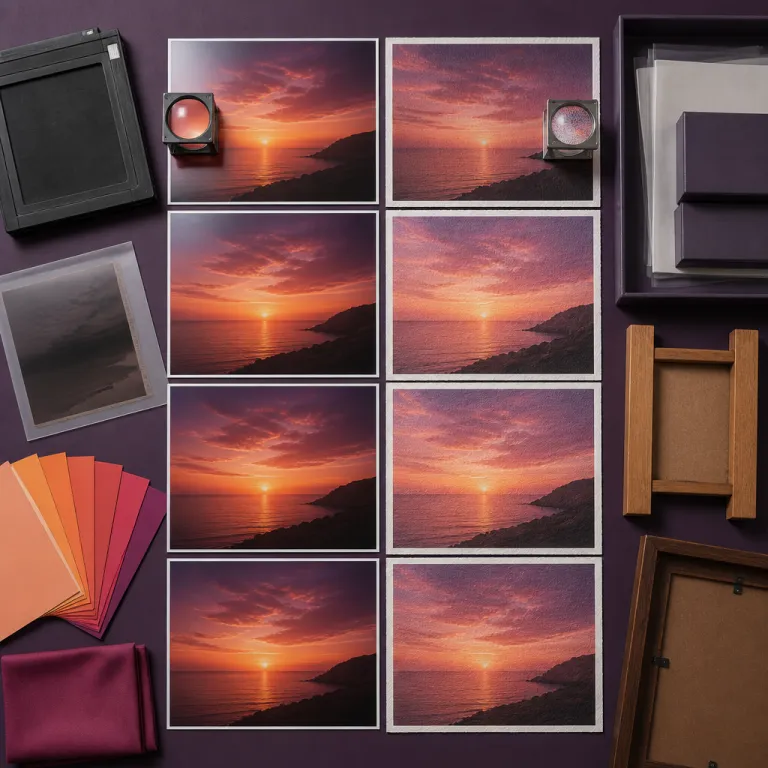
Why collecting photography prints editions starts with the paper and chemistry
Every serious photography collection begins not with the frame but with the sheet. When you look at large format prints in a gallery, you are really comparing different chemistries, different papers, and different ways that light passes through the image to reach your eye. Treat each print as a physical object first, and only then as an art photograph with a story and a market value.
Chromogenic C print photographs, often simply called C prints, are made on light sensitive paper and developed in chemistry that slowly shifts under light exposure. A C print in a photography collection can show subtle yellowing or magenta drift over time, especially when the condition photograph has been compromised by direct sunlight or poor glazing. That is why a collector who cares about time original color should always ask about the printing date, the storage history, and the exact type of paper used for the work.
By contrast, pigment inkjet edition prints use microscopic pigment particles that sit on the surface of the paper, offering far better lightfastness. For collecting photography prints editions at scale, archival pigment printing has become the default for fine art photography because tests suggest stability well beyond a human lifetime under museum conditions. When you compare a pigment print to a C print of the same image, the blacks can look deeper, the micro contrast in a black white passage can feel crisper, and the overall impression is of an image designed to survive.
Then there is silver gelatin, the classic darkroom process for black white photographs, where metallic silver forms the image within the paper’s emulsion. A silver gelatin print has a particular depth in the mid tones that many collectors describe as almost sculptural, and in a collection limited to monochrome work it often becomes the anchor medium. When you see a vintage silver gelatin photograph by a master photographer, you are looking at a time original object whose chemistry, paper fiber, and surface sheen are inseparable from its market value.
For luxury collectors, the choice between C print, pigment inkjet, and silver gelatin is not just about taste. It is about aligning the physical durability of the print with the scale of the edition, the ambition of the art collection, and the realities of display in a domestic space. If you plan to live with large images limited only by your wall size, you must understand how each process responds to light, humidity, and framing over decades.
Edition size, numbers, and the real meaning of scarcity
Scarcity in photography is written in small pencil marks along the margin of the sheet. When you see a number edition such as 2/5 on a large format print, you are reading a contract between the artist, the gallery, and every future collector who will handle that work. Collecting photography prints editions intelligently means learning to decode that contract rather than taking the sales pitch at face value.
In fine art photography, a limited edition of three to eight prints per image is now considered tight, while commercial photographers may release limited editions of twenty five or even fifty. A collection limited to very small edition size ranges will usually feel more focused, but you pay for that focus in higher entry prices and thinner secondary market liquidity. When you see editions that mix several formats, always ask how many large prints exist, how many smaller prints exist, and whether any open edition posters or book reproductions might dilute the perceived rarity of the image.
Artist proofs sit slightly outside this arithmetic yet matter enormously for value. Most photographers keep one or two artist proofs per edition, marked as A.P. or E.A., and these artist proofs can carry a premium when the artist is highly collected and the main edition prints have sold out. For a new collector, buying an artist proof can be a way to enter an art photography market tier that might otherwise be closed, but only if the proof is documented clearly in the artist’s catalogue raisonné or estate records.
Be wary of the vague phrase edition limited when it appears without a clear number. A serious gallery will specify the total number prints across all sizes, all formats, and all limited edition and open edition variants, and they will put that information in writing on the invoice. When you commission a living photographer to create a new work, insist that the edition structure is agreed in advance, just as you would define scope and timeline in any carefully managed commission for a living artist’s work.
For large format collecting photography, the size of the sheet and the edition size interact in subtle ways. A huge image in a limited edition of three may sound irresistible, but if only a handful of collectors worldwide can physically hang such a work, resale markets can be surprisingly thin. Smart collectors balance number edition scarcity with practical display considerations, building an art collection that can actually live on walls rather than in storage tubes.
Large format, value, and why bigger is not always better
Scale seduces, especially when you first step into a white cube lined with monumental photographs. A two metre wide print can feel like a window cut into another world, and many collectors assume that the largest available size within an edition must be the most valuable. The reality is more nuanced, and understanding it will save you from paying a size premium that the market may not reward later.
Within a single edition, large format prints often command three to five times the price of smaller prints from the same negative or digital file. That price gap reflects higher production costs, more demanding mounting and framing, and the simple drama of a big image, yet it also reflects a narrower pool of collectors who can accommodate such works. When you are collecting photography prints editions with an eye to both pleasure and potential resale, you must ask whether the extra metres of paper translate into sustainable demand or just temporary spectacle.
Display logistics are the quiet constraint behind many large format acquisitions. A face mounted pigment print on acrylic, for example, requires deeper framing, careful handling, and robust wall fixings, which can be challenging in older properties or apartments with delicate plaster. If your photography collection includes several oversized works, you may find that rotation becomes necessary simply to manage light exposure budgets and to keep the condition photograph of each piece within acceptable conservation limits.
Medium scale works, often between 60 and 100 centimetres on the long side, can offer a sweet spot for collectors. These prints still deliver immersive images limited only by your viewing distance, yet they remain flexible enough for domestic walls and modest ceiling heights. In many markets, such as the secondary sales of Andreas Gursky or Thomas Ruff at Sotheby’s and Christie’s, these mid sized edition prints show more consistent liquidity than the very largest formats.
When you evaluate a large format limited edition, look beyond the headline dimensions. Ask how many prints exist at that size, how many smaller prints share the same image, and whether any images limited to a single monumental print have established a track record at auction. For a deeper dive into how visible craft and physical presence affect value across mediums, it is worth reading this analysis of the proof of hand economy, which unpacks why collectors are paying premiums for works where the making is unmistakably human.
Verifying editions, provenance, and the quiet paperwork behind every print
The most expensive part of a major photograph is often the paperwork that travels with it. A signed and numbered print without a clear trail of invoices, certificates, and gallery records is a risk, no matter how seductive the image on the wall may be. Collecting photography prints editions at a high level means treating documentation as part of the work, not as an afterthought.
Start with the basics on the sheet itself, where the artist usually writes the edition number, the title, the date, and the signature in pencil along the margin or on the reverse. That small number prints mark, such as 1/6, must match the information on the gallery invoice and on any certificate of authenticity, and any discrepancy should trigger questions before you commit. If the artist is represented by a major gallery, ask whether the work appears in their internal inventory system and whether the edition is tracked in the artist’s studio records.
For blue chip photographers like Cindy Sherman, Wolfgang Tillmans, or Jeff Wall, catalogue raisonné projects and artist estates maintain detailed lists of editions. When you are considering a high value limited edition or one of the rare unique prints that some photographers now produce, it is reasonable to request written confirmation from the artist’s studio or estate that the edition size and number edition are correct. Serious collectors often maintain a private dossier for each work in their art collection, including condition reports, shipping documents, and any correspondence with the artist or gallery.
Artist proofs require special attention because they sit outside the numbered sequence yet share the same image and format. A responsible gallery will specify how many artist proofs exist for a given photograph and whether any additional proofs, such as printer’s proofs, were produced during testing. When you read about the proof of hand economy in relation to painting and sculpture, remember that in photography the equivalent often lies in these proofs, where the artist and printer refine the exact balance of tone and color before committing to the final edition.
Finally, treat every email, every contact with a gallery, and every condition photograph taken during shipping as part of the provenance chain. Store digital copies of invoices and certificates in a secure archive, and keep physical documents in a separate file from the framed work to protect them from light and humidity. A well documented photography collection not only holds its value more reliably but also signals to future buyers and institutions that the collectors behind it understand their responsibilities.
Living with large prints: light, storage, and the quiet discipline of care
Once the crate is opened and the print is on your wall, the real work begins. A large format photograph is a living object in your home, constantly negotiating with light, temperature, and the rhythms of your daily life. Collecting photography prints editions responsibly means planning for decades of display, not just the first dramatic hanging.
Light is both the medium and the enemy of photography, especially for C prints and some early inkjet processes. To protect a limited edition C print, insist on UV filtering glazing, keep the work away from direct sunlight, and consider using dimmable lighting that can be adjusted for evening viewing. Museums often speak of light exposure budgets, rotating sensitive works off display after a set number of months, and private collectors can borrow this strategy by periodically resting their most fragile images in dark storage.
Framing choices matter just as much as chemistry. A face mounted pigment print on acrylic can look almost immaterial, with the image floating at the surface, yet this method traps the photograph in a rigid sandwich that is difficult to repair if damaged. Traditional window matting with a small air gap between the glass and the print may feel less dramatic for some art photography, but it allows conservators to access the sheet and to monitor the condition photograph over time.
Storage is where many photography collections quietly fail. Rolling large prints into tubes may seem practical, yet repeated rolling and unrolling can create micro cracks in the emulsion, especially for older silver gelatin or C print works. Whenever possible, store unframed edition prints flat in archival boxes or plan chests, interleaved with acid free tissue, and keep the environment stable in both temperature and humidity.
As your photography collection grows, think of it as a living archive rather than a static display. Rotate works between walls and storage, keep a simple spreadsheet of locations and light exposure periods, and photograph each work annually to track any subtle shifts in color or surface. The collectors who treat care as part of the pleasure of ownership are the ones whose images limited by chemistry and paper still look fresh when the market has moved on to the next trend.
FAQ
How do I choose between C print, pigment inkjet, and silver gelatin for a first large format purchase ?
For a first major acquisition, focus on how you plan to live with the work. If you want rich color and are willing to manage light carefully, a pigment inkjet limited edition on archival paper offers strong longevity and flexibility in size. If you are drawn to black white tonal depth and a more classic look, a silver gelatin print in a modest edition size can anchor your collection limited to a few carefully chosen works.
Are unique photographic prints a better investment than traditional limited editions ?
Unique prints, sometimes described as edition of one, can command strong prices because they borrow scarcity logic from painting and sculpture. However, the market for such works is still developing, and liquidity can be lower than for well established limited editions by blue chip photographers. Treat unique works as high conviction purchases where your attachment to the specific image and artist outweighs any expectation of easy resale.
What edition size should I target if I care about long term value ?
For fine art photography, editions of three to eight prints per image at a given size are generally considered tight enough to support value while still allowing a healthy collector base. Larger edition sizes, such as twenty five or fifty, can be perfectly acceptable for more affordable works or for images intended for broader circulation. The key is transparency about the total number prints across all sizes and formats, including any artist proofs or special variants.
How important is the artist proof status compared with a regular numbered print ?
Artist proofs can carry a modest premium when the photographer is highly sought after and the main edition is sold out, because they are by definition scarce. For emerging photographers, the difference between an artist proof and a numbered print is often more symbolic than financial, so condition and image quality should take priority. In all cases, ensure that the number of artist proofs is clearly documented and consistent with the artist’s usual practice.
What should I ask a gallery before buying a large format photograph ?
Before committing, ask about the printing method, paper type, edition size, and any previous or planned editions of the same image at other sizes. Request a written condition report, details of recommended framing and glazing, and confirmation that the work is recorded in the artist’s or estate’s inventory. Finally, review the gallery’s privacy policy and documentation practices, since clear records and secure handling of your contact details and invoices will matter if you ever decide to sell or donate the work.