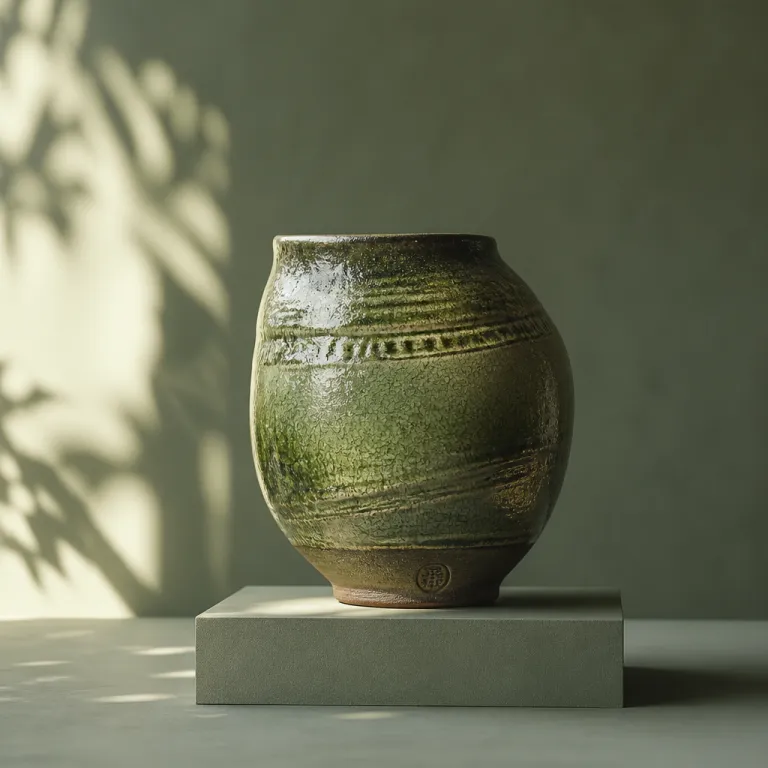
The craft to fine art shift in contemporary ceramics
Ceramics moved from the craft table to the white cube once museums, critics, and the art market started treating clay as a primary medium rather than a decorative afterthought. As institutions such as MoMA, Tate, and the Victoria and Albert Museum began acquiring contemporary ceramics alongside painting and sculpture, collectors in the United States and Europe suddenly saw ceramic art priced and presented as fine art, not as anonymous pottery on a shelf. That institutional validation, combined with serious writing on contemporary art and clay-based practices, reset expectations for what a single vase or sculptural ceramic piece could be worth.
Look at Magdalene Odundo, whose hand-built vessels now command roughly 100,000 to 500,000 dollars at auction according to recent Sotheby’s and Bonhams results (for example, Sotheby’s London, 12 May 2022, lot 24, and Bonhams London, 5 October 2021, lot 32), and you see how collecting ceramic sculpture has become a serious strategy rather than a side hobby. Grayson Perry’s ceramic art, once dismissed as eccentric studio pottery, now sells from about 50,000 dollars into the multimillion range in sales reported by Christie’s and Phillips (for instance, Christie’s London, 25 June 2018, lot 5, and Phillips London, 15 April 2021, lot 10), and his work appears at major art fairs and in blue-chip galleries that previously reserved space for painting and fine art sculpture. When ceramic artists share rosters with painters at Pace, Gagosian, and Lisson, the signal to collectors is clear: studio ceramics and contemporary art now share the same commercial stage.
This shift matters for how you build a collection of clay-based work and how you think about acquiring ceramic pieces over time. Instead of treating pottery as décor, sophisticated collectors now evaluate each ceramic artist with the same rigor they apply to abstraction or photography, weighing studio practice, techniques, and exhibition history. The result is a market where collecting ceramics and collecting contemporary painting feel structurally similar, but the content of the work and the tactile presence of clay offer a different kind of intimacy in the hand and on the wall.
How to read and judge ceramic work like a serious collector
Evaluating contemporary ceramics starts with form, proportion, and how the clay carries weight in space. A strong ceramic art piece often reveals the artist’s hand in the curve of a vase, the tension of a lip, or the way a wall piece leans into light, and those decisions separate serious ceramic sculpture from generic pottery. When you are collecting studio pottery or sculptural clay work, train your eye to move slowly around the piece, reading the silhouette first, then the surface, then the interior volume.
Surface tells you about techniques and risk, whether you are looking at Takuro Kuwata’s explosive glazes or Andile Dyalvane’s carved studio pottery rooted in Xhosa traditions. Multiple firings, complex glaze chemistry, and experimental firing techniques usually mean higher failure rates in the studio, which is one reason the art market rewards the surviving pieces with steeper prices. When you read full condition reports, pay attention to how often the artist pushes clay and glaze to their limits, because that experimentation is part of the content and part of the value; as one senior specialist at a major auction house put it, “kiln risk is often priced into the hammer result.”
Condition is where many new collectors of ceramic art quietly overpay, especially when they fall for a rare vase or sculptural work with hidden damage. Chips, hairline cracks, overpainting, and amateur restoration can all kill the long-term prospects of a piece, so learn to use a detailed condition report decoded by a trusted advisor or by resources such as a guide to reading every line of a condition report. In collecting ceramics and other fine art objects, one discreet word in that report can matter more than the artist’s name, because the market will always punish compromised clay more harshly than a lightly restored canvas.
Quick buyer’s checklist for contemporary ceramics
Before you commit to a purchase, run through a short condition checklist: inspect the rim, handles, and foot ring for chips; look for hairline cracks under raking light; ask whether any areas have been overpainted or filled; confirm whether the work has been restored or re-fired after damage; and compare the piece with documented examples by the same artist so you can distinguish intentional firing effects from later accidents.
Risk, accident, and the wabi sabi premium in clay
Clay remembers every decision, and sometimes the kiln edits the artist more ruthlessly than any curator. In contemporary ceramics, the most coveted pieces are not always the most technically perfect; they are often the works where controlled accident, firing surprises, or intentional distortion create a singular presence that collectors cannot forget. When you are collecting ceramic sculpture, you are effectively buying into a record of risk, failure, and the one piece that survived with exactly the right scar.
Japanese and Korean traditions of wabi sabi aesthetics have long valued asymmetry, crackle glazes, and the quiet drama of imperfection in pottery and ceramic tea ware. Contemporary studio artists such as Shio Kusaka or Takuro Kuwata translate that sensibility into contemporary art design objects that sit comfortably in both design collections and fine art collections, blurring the line between studio pottery and sculpture. The art market has followed, with Phillips and other houses reporting roughly 45 percent growth in ceramics sales volume over a recent five-year period in their design and contemporary ceramic categories, a trend echoed in TEFAF market reports for 2016–2021 that highlight increased demand for clay-based work.
For a collector, the question is how to separate meaningful accident from simple damage when looking at contemporary ceramics and artists’ ceramics at fairs or exhibition programs. A glaze pool that breaks just short of the foot ring can add tension and value, while a post-firing chip on the same foot will haunt future buyers and depress the price, even if the rest of the work sings. If you want a deeper beginner guide to risk and reward across media, it can be useful to compare how collectors approach second-generation abstraction in resources such as a guide to collecting second generation Abstract Expressionism, then apply the same logic to clay-based work.
Where to buy: from studio pottery to blue chip fairs
Entry points for collecting contemporary ceramics art still exist, but you need to look beyond the obvious design boutiques. The sweet spot for many aspiring collectors sits between about 2,000 and 15,000 dollars per piece, where you can acquire serious ceramic art from emerging ceramic artists before the major galleries and art fairs push prices into the stratosphere. That range often buys ambitious work from a contemporary studio potter who already has a few strong exhibition credits and perhaps a group show at a regional museum.
Start with studio visits and smaller galleries that specialise in contemporary ceramics and contemporary art design, where you can see the clay, glazes, and firing techniques up close. In the United States, spaces such as Cavin Morris Gallery in New York or Jason Jacques Gallery have long championed artists’ ceramics, while in London, galleries like Erskine, Hall & Coe or Marsden Woo have built deep rosters of ceramic artists. When you buy directly from a studio pottery context, you not only support the artist’s hand and practice, you also gain insight into the work that no art fair booth can match, including informal provenance details such as early collectors and exhibition history.
At the higher end, fairs such as TEFAF, Design Miami, and Art Basel now feature contemporary ceramics alongside painting and sculpture, which means you can compare prices and quality across multiple dealers in a single day. If you want to plan which events align with your collection and your budget, use a focused guide to choosing art fairs that are worth the flight rather than chasing every glamorous opening. The more you see, the more quickly you will recognise when a 10,000 dollar vase or sculptural clay work is priced for hype rather than for lasting presence in a serious collection.
Building a coherent ceramics collection in a painting driven market
Most luxury collectors still default to painting, so a focused ceramics collection can feel both contrarian and deeply personal. The key is to treat collecting ceramics and collecting contemporary painting with the same strategic discipline, building a narrative around material, geography, or concept rather than accumulating random pottery and clay objects. When you think of your shelves and plinths as walls by other means, each ceramic art piece becomes a chapter in a larger story rather than an isolated purchase.
One approach is to centre your collection on contemporary studio practices that push clay into sculptural territory, then add functional vases or bowls that echo those ideas in the hand. Another is to follow a small group of ceramic artists across time, buying early studio pottery experiments, mature contemporary ceramic works, and later fine art collaborations, so you can read the evolution of their techniques and content across decades. Either way, you are building a living archive of contemporary ceramics and contemporary art thinking, not just a cabinet of curiosities.
Because the art market still undervalues many artists’ ceramics relative to painting, a disciplined collector can assemble museum-calibre contemporary ceramics collections for the price of a single blue-chip canvas. Use a personal beginner guide checklist when you attend art fairs, gallery shows, or exhibition programs, noting which artists recur in institutional collections and serious catalogues. If you want ongoing context and market analysis tailored to clay, it is worth creating your own way to subscribe to ceramics-focused newsletters, dealer updates, and museum content, so that every new piece you buy earns its place not just with a certificate, but with the wall and the pedestal it deserves.
FAQ
How much should I budget for my first serious contemporary ceramic piece?
For a first acquisition in contemporary ceramics, a realistic budget for a serious work by an emerging artist usually falls between 2,000 and 8,000 dollars. That range can secure a substantial vase, a small sculptural work in clay, or a strong example of studio pottery from a contemporary studio with a few museum group shows. Below that level you can still find good pieces, but they are more likely to be early experiments or decorative pottery rather than core collection anchors.
What condition issues matter most when buying ceramic art?
The most critical condition issues in ceramic art are chips, cracks, structural repairs, and overpainting that hides damage. Crazing in the glaze or minor firing irregularities can be acceptable or even desirable in some contemporary ceramics, but post-firing damage almost always reduces value and future liquidity. Always request a written condition report, examine the work in raking light, and ask directly about any restoration before committing; a single note such as “restored loss to rim” can explain a suspiciously low estimate.
Are functional vases and bowls taken seriously by the art market?
Functional vases and bowls are increasingly taken seriously when they are made by recognised ceramic artists with strong exhibition histories. The art market now treats certain functional forms as sculpture that happens to hold flowers or food, especially when the techniques, glazes, and forms match the artist’s non-functional work. For collectors, this means a well-chosen functional piece can be both usable and a credible part of a fine art collection.
How do I know whether to buy at a gallery, fair, or directly from a studio?
Buying directly from a studio often offers the best access to the artist and the most context about their techniques, but galleries and fairs provide broader market comparisons. Galleries can help you understand where a piece sits within the artist’s overall production and within contemporary art pricing, while fairs allow you to compare multiple artists’ ceramics in one visit. Many collectors mix all three channels, using studio visits for depth, galleries for guidance, and fairs for discovery and price benchmarking.
Is it risky to focus my collection mainly on ceramics rather than painting?
Focusing on ceramics carries different risks than focusing on painting, but not necessarily greater ones if you buy with discipline. The market for contemporary ceramics is less mature and more volatile, yet that also means there is more room for price growth and for assembling distinctive collections at accessible levels. If you prioritise artists with strong institutional support, clear exhibition records, and rigorous studio practices, a ceramics-focused collection can be both intellectually satisfying and financially resilient.