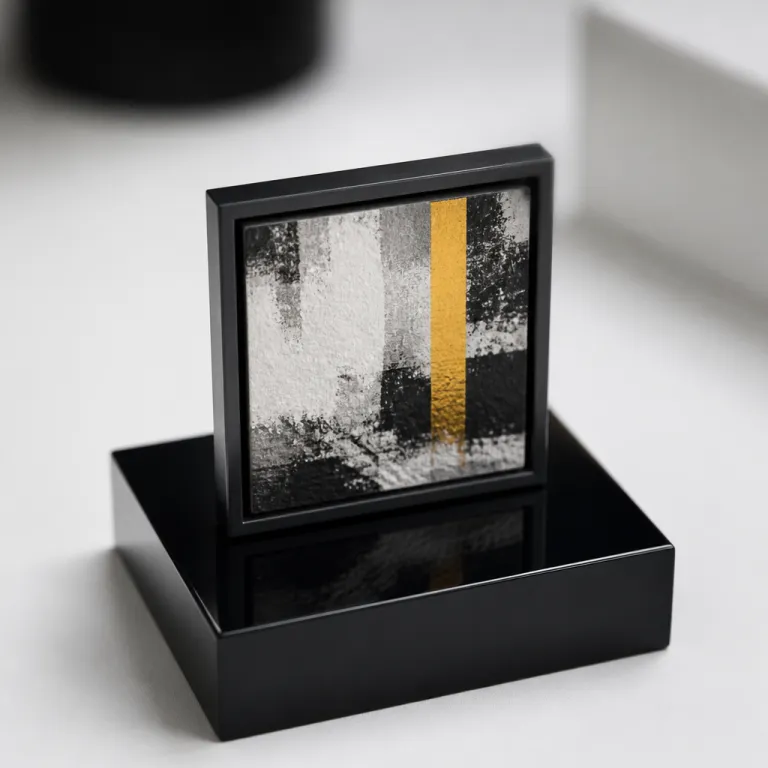
Focus stacking as a signature of luxury digital imagery
Focus stacking in luxury digital artwork can elevate meticulous photography into gallery-worthy images. When a digital artist controls focus and stacking with intent, the image gains a sculptural depth that a single exposure simply cannot reach. In high-end collections, this approach often distinguishes a routine photograph from a collectible artwork that can sustain attention for years.
At its core, focus stacking is a technique where a series of images is captured with different focal points across the subject and the surrounding scene. Each frame in the sequence is taken with a slightly shifted focus field so that one slice of the subject remains in sharp focus while other layers fall away. Later, stacking software merges this image stack into one composite, combining only the sharp regions to create a final image with extended depth of field that feels almost three dimensional.
Luxury collectors value this stacking technique because it allows the artist to control depth and background with surgical precision. Instead of accepting the narrow depth of field imposed by a single lens setting or focal length, the artist builds a focus stack that preserves every important detail while still guiding the eye. The result is a focus-stacked artwork where the subject, the background, and the subtle transitions of depth become deliberate compositional tools rather than technical limitations.
Digital artistry, lenses, and the architecture of depth
In luxury digital photography, the choice of lens and focal length defines how focus stacking will behave across the image. A macro lens at close distance creates an extremely shallow depth of field, so the artist must capture many photos in a sequence to cover the subject from foreground to the farthest detail. With a longer focal length used for sculptural objects or haute couture pieces, fewer frames may be needed, but each focus step must be planned with equal care.
Many luxury digital artists rely on a focusing rail to move the camera in tiny increments while maintaining manual focus on the lens. This focusing rail approach keeps the focal length constant and shifts the camera position, which preserves perspective and avoids distortion in the final image stack. When the composite image is later assembled in stacking software, every layer aligns cleanly, allowing the artist to refine sharp focus only where the subject demands attention and to soften the background into a velvety blur.
Lighting is equally critical, especially when the artist plans extensive post-processing on the focus-stacked file. Subtle gradients of light across reflective surfaces, gemstones, or metallic pigments must remain consistent across every photo in the focus stack, otherwise the stacking technique can create halos or artifacts. Tools such as refined light brushes for Photoshop, as explored in specialized guides to refined light post brushes, help artists sculpt these layers of luminosity after the stacked images have been merged.
From camera ritual to software mastery in luxury workflows
Creating a luxury-grade focus stacking artwork begins long before any software is opened. The camera must be locked on a stable support, the lens set either to manual focus or to a carefully controlled focus bracketing mode, and the subject positioned so that the relationship between foreground and background supports the narrative of the piece. Many artists prefer manual focus adjustments for each frame in the capture sequence, because this gives them direct control over which focal planes will later define the composite image.
Once the photos are captured, the digital ritual moves into specialized stacking software such as Helicon Focus, which is widely used for both single-stack projects and complex multi-frame series. Helicon Focus analyses each focus slice, selects the sharpest pixels from every layer, and then blends them into a unified focus stack that maintains natural transitions of depth. For luxury artwork, this software stage is where the artist decides how aggressively to pursue sharp focus across the field and where to allow a gentle falloff into the background.
After the focus-stacked file is created, meticulous post-processing follows in tools such as Adobe Photoshop or similar photography suites. Here, the artist refines color, contrast, and micro texture, often masking specific layers from the image stack to emphasize chosen focal points or to soften distracting details in the background. Collectors who appreciate timeless images of luxury objects can see the difference immediately, as the final photograph feels both technically precise and emotionally resonant, a quality explored in depth in analyses of photography as an art of enduring luxury.
Luxury subjects, foreground background choreography, and visual storytelling
Focus stacking becomes especially powerful when applied to luxury subjects such as high jewelry, horology masterpieces, or limited-edition design objects. A single image with shallow depth of field might render only one diamond facet or one gear tooth in sharp focus, leaving the rest of the subject visually vague. By building a carefully planned focus stack, the artist can keep the essential architecture of the piece crisp while still allowing the background to melt away into an elegant blur.
Consider a macro photography study of a tourbillon watch where the camera moves along a focusing rail, capturing a sequence that travels from the sapphire crystal to the deepest gear. A typical capture might use a full-frame camera body at ISO 100, a 100 mm macro lens at f/8, a rail step size of 0.3 mm, and 40 to 60 frames in the stack. Each frame in this series records a different plane of focus, and the stacking technique later merges them into a composite where the entire mechanism appears in sharp focus while the strap and distant background remain understated, often producing a 16-bit TIFF master file in the 500 to 800 MB range.
For luxury interiors or large-scale art installations, artists may use a wider focal length and a more restrained focus bracketing approach. Here, the goal is not to render every surface in absolute sharp focus, but to guide the gaze from foreground to background elements in a controlled rhythm. By choosing which focal planes to include in the final image stack, the artist can make a room-sized subject feel intimate, allowing the collector to explore the photograph as if walking slowly through the space.
Curating and hanging focus stacked luxury artworks
Once a focus-stacked artwork is printed at large scale, the way it is hung and curated becomes part of the stacking technique narrative. A print that reveals microscopic detail across the entire field will reward close viewing, so it should be placed where collectors can approach within a few tens of centimeters. In contrast, a focus stack that keeps only a central subject in sharp focus while allowing the background to dissolve may work better across a longer viewing distance, creating a soft halo of depth around the image.
Curators must also consider how multiple images with different depth-of-field treatments interact on the same wall. Hanging a sequence of works where each composite image uses similar focal length and similar foreground-to-background transitions can create a harmonious visual rhythm. Guidance on arranging mixed-medium collections without visual conflict, such as the strategies discussed in specialized resources on hanging mixed medium collections, becomes especially relevant when combining focus stacking prints with paintings or sculptures.
Lighting again plays a decisive role, because it must respect the internal logic of the focus map created by the stacking software. Spotlights that emphasize the sharp-focus zones of the subject will reinforce the depth cues already encoded in the photograph, while softer ambient light can help integrate the background into the surrounding architecture. Collectors who do not simply hang photos but curate environments will appreciate how a well-placed focus stack can anchor a room, acting as both artwork and optical destination.
Collecting, preserving, and valuing focus stacked digital artworks
For serious collectors, understanding the technical depth behind focus stacking helps in assessing long-term value. A luxury digital artwork built from a carefully executed image stack, with precise manual focus or controlled focus bracketing and expertly handled post-processing, represents many hours of skilled labor and specialized equipment. This includes not only the camera and lens, but also the focusing rail, the stacking software, and the calibrated screens used to judge focus and color.
Archival printing of focus-stacked photos requires papers and inks that can resolve the fine detail created by the stacking technique. When a subject has been rendered with sharp focus across the entire field, any weakness in print resolution or color stability will be immediately visible, especially at large formats above one meter on the long edge. Collectors should request information about the full workflow, from the original capture sequence and image stack to the final composite file, to ensure that the technical integrity of the photography is preserved.
Market-wise, focus stacking has become a recognizable hallmark of certain luxury digital artists who specialize in macro studies of jewelry, watches, and haute couture textures. Their photographs often command higher prices because the combination of subject rarity, sophisticated lens work, and advanced stacking software produces images that are difficult to replicate casually. When evaluating such works, pay attention to how the foreground-to-background relationship supports the narrative, how the focal points guide the eye, and how seamlessly the layers of depth of field have been blended into a coherent visual experience.
Key statistics on focus stacking in luxury digital art
- Industry reports from major camera brands indicate that macro lenses in the 90 mm to 105 mm range are widely adopted in professional product and jewelry photography, reflecting their central role in focus stacking workflows for luxury objects.
- Studio tests published by commercial photography educators suggest that multi-image focus stacking can noticeably increase perceived sharpness and detail retention compared with single-exposure images printed at large formats, which directly influences the visual impact of luxury artwork prints.
- Professional software vendors note that automated focus bracketing and stacking features are now included in many high-end camera bodies and editing suites, underscoring how focus stacking has moved from niche technique to common practice in premium photography.
- Archival print labs report that focus-stacked files often benefit from resolutions at or above 300 pixels per inch for optimal output, which can increase storage and processing requirements compared with conventional photo files but yields visibly superior depth and clarity.
FAQ about focus stacking in luxury artwork
How does focus stacking differ from using a small aperture ?
Using a small aperture increases depth of field but also introduces diffraction, which softens the image and reduces sharp focus across fine details. Focus stacking instead combines multiple images taken at sharper apertures, preserving micro contrast while extending depth. For luxury artwork, this means the subject can remain crisp from foreground to background without sacrificing overall image quality.
Which subjects benefit most from focus stacking in luxury art ?
Subjects with intricate detail and three-dimensional structure benefit most, such as high jewelry, mechanical watches, couture fabrics, and sculptural design objects. In these cases, a single image cannot keep all critical focal points sharp, especially at close distances. A carefully planned focus stack allows the artist to reveal every layer of craftsmanship while still controlling the mood of the background.
Is specialized software like Helicon Focus essential for collectors to value the work ?
Collectors do not need to operate Helicon Focus or similar stacking software themselves, but understanding that such tools were used signals a high level of technical expertise. These programs manage the complex blending of layers in the image stack, which is difficult to achieve manually. Knowing that an artist masters both the camera side and the software side of focus stacking can justify higher valuations.
Can focus stacked artworks be printed at very large sizes without losing quality ?
When the original capture sequence is produced with a high-resolution camera and the stacking technique is executed cleanly, focus-stacked artworks can be printed at impressive sizes while retaining detail. The extended depth of field created by the focus stack actually helps large prints feel more immersive, because viewers can move closer without encountering soft or unfocused zones. Collectors should confirm that the final composite file has sufficient resolution and that archival printing standards are used.
Does focus stacking make every part of the image equally sharp ?
Focus stacking can make every part of the image sharp, but in luxury artwork it is usually applied more selectively. Artists often choose specific focal points to keep in sharp focus while allowing other areas to remain softer, preserving a sense of depth and atmosphere. The most sophisticated works use the image stack and post-processing to balance clarity and softness so that the subject feels both realistic and poetic.