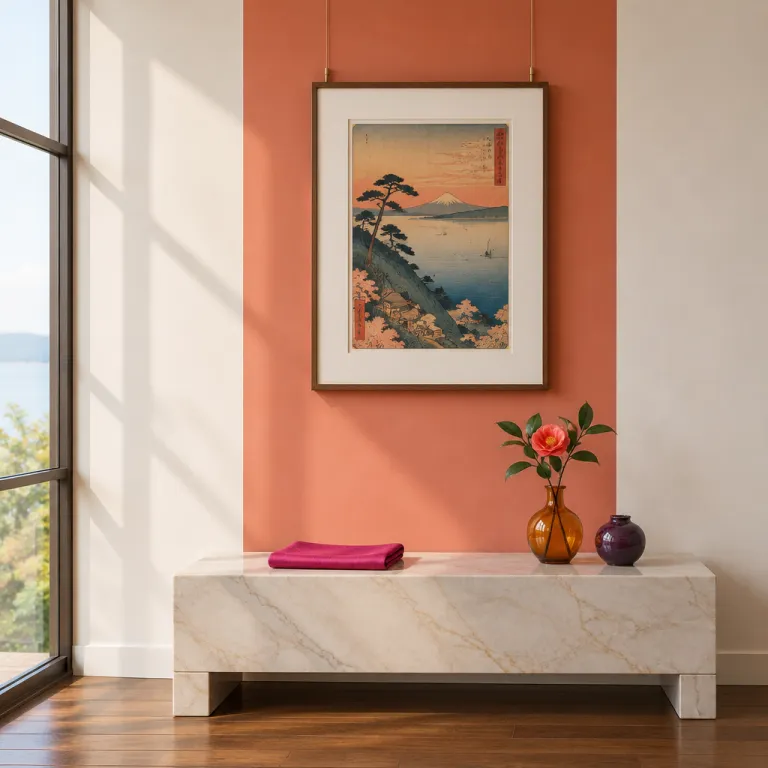
Why a japanese print framed becomes a luxury statement
A carefully chosen japanese print framed can anchor an entire room. When a single art print is treated as fine art rather than décor, the framing, lighting, and placement transform the space into a curated environment. A framed Japanese print finished to museum standards turns a simple wall into a quiet, powerful gallery.
Luxury collectors approach each japanese print as a complete artwork, not just a print on paper. They evaluate the frame, the mat, the glazing, and the relationship between color, size, and surrounding wall art to ensure the framed art feels intentional and rare. When japanese prints are framed with this level of care, they sit comfortably beside sculpture, mid century furniture, and other fine art pieces.
The most refined interiors often pair a single japanese woodblock with a restrained black frame and off white mount. This simple choice allows the japanese art to breathe, while the framed silhouette creates a strong graphic presence on the wall. In a larger collection, several japanese prints framed in related materials can form a quiet rhythm that guides the eye along a corridor or above a console.
Collectors who focus on japanese print traditions usually seek first state impressions and crisp woodblock print lines. They understand that a japanese print framed with archival materials will age gracefully, preserving the delicate pigments that give these artworks their special luminosity. When such art prints are handled by expert framers, the result is a framed art object that can confidently sit in a museum level collection.
Even a mini japanese print framed at jewel scale can feel monumental when placed correctly. A small artwork, floated in a generous frame with balanced framing margins, creates a sense of luxury through negative space. This play between mini formats and large framing fields is particularly effective in mixed media walls that combine japanese prints, art posters, and photography.
For serious buyers, the decision to acquire a japanese print framed rather than unframed is often strategic. A finished frame allows immediate installation, but it also reveals how the artwork behaves under glass, how the colors respond to light, and how the overall artwork will sit within an existing collection. When the framing is executed to museum standards, the framed piece can move seamlessly between private interiors and institutional loans.
Mastering framing japanese woodblock prints as mixed media objects
Framing japanese woodblock prints is not only a conservation exercise; it is also a mixed media design decision. A japanese print framed correctly respects the original paper, the pigments, and the subtle embossing that often appears in fine art impressions. The frame, mount, and glazing together become a secondary artwork that must never overpower the japanese print itself.
When collectors treat a japanese woodblock as a mixed media object, they consider how the paper, the ink, and the frame materials interact. A black frame in stained oak, for example, can echo the deep key lines of the print, while a warm linen mount softens the transition between artwork and wall. This approach to framing japanese pieces turns each art print into a carefully tuned composition of textures and tones.
Many luxury interiors now integrate japanese prints alongside textiles, ceramics, and sculptural wall art. In such mixed media settings, a japanese print framed with a floating mount allows the deckled edges of the paper to remain visible, emphasizing the tactile nature of the artwork. The result is framed art that feels both historical and contemporary, especially when paired with mid century furniture or minimalist lighting.
Collectors often ask how to balance color when framing japanese prints in rooms dominated by neutral palettes. A restrained frame in natural wood or matte black will usually let the japanese art carry the color, while a subtle inner slip in a related tone can quietly echo a kimono, a sky, or a fall maple leaf within the artwork. This kind of framing japanese strategy respects the original art japanese aesthetic while still responding to the architecture.
Mixed media walls that combine japanese prints, art posters, and photography benefit from consistent framing rules. Keeping the frame profiles and mount colors aligned allows each japanese print framed piece to shine without visual noise, even when the artworks vary in size and subject. Luxury collectors often commission bespoke framing for entire art prints collections to achieve this level of cohesion.
For those exploring other mixed media luxuries, studying how couture makers handle texture can be revealing. The way high fashion treats fabric layering is closely related to how a framer layers mountboard, spacers, and glazing around a japanese print framed to museum standards, a parallel explored in depth in this analysis of art yarn as a couture medium for the luxury collector. Thinking of framing japanese works as couture for paper encourages a more nuanced, tactile approach to every frame decision.
Choosing the right frame, size, and color for japanese prints
Selecting the ideal frame, size, and color for a japanese print framed is a matter of proportion and restraint. Luxury collectors know that the wrong frame can flatten a woodblock print, while the right one amplifies every subtle gradation of ink. The goal is always to let the japanese print lead, with the framing acting as a quiet, supportive architecture.
For classic japanese prints such as landscapes or bijin ga, a slim black frame with a generous off white mount remains a timeless choice. This simple framing japanese approach works especially well for pieces by masters like kawase hasui, katsushika hokusai, and utagawa hiroshige, whose compositions rely on strong silhouettes and delicate color transitions. When these artworks are framed with consistent profiles, they form a coherent wall art ensemble that feels both disciplined and luxurious.
Size is another critical variable when commissioning a japanese print framed for a high end interior. A small woodblock print can be given presence by expanding the mount margins, while a larger artwork may require a deeper frame to avoid visual heaviness on the wall. Collectors often experiment with mini clusters of art prints, grouping three or five japanese prints in related sizes to create a rhythmic, gallery like effect.
Color decisions should respond to both the artwork and the room. A warm timber frame can echo the vintage feel of an early utagawa kunisada or utagawa kuniyoshi print, while a cooler black frame may suit a more graphic great wave impression by katsushika hokusai. In each case, the japanese print framed result should feel integrated with the surrounding furniture, textiles, and architectural lines.
Those who collect across categories often align their japanese prints with other vintage objects. A wall that pairs framed art from the ukiyo e tradition with a shelf of period ceramics can feel especially rich, a dialogue explored in this study of timeless elegance in vintage ceramic vases. When the frame colors and materials echo these objects, the entire collection reads as a single, orchestrated artwork.
Luxury buyers also consider how the frame will age over time. Natural woods develop a patina that can complement the slight mellowing of paper tones in japanese prints, while high gloss finishes may feel less forgiving as the artwork matures. By choosing stable, archival materials and balanced proportions, a japanese print framed today can remain visually and structurally sound for generations.
Curating a japanese print collection for architectural walls
Building a collection of japanese prints for a significant wall is closer to architectural planning than simple decoration. Each japanese print framed becomes a structural unit, contributing to the rhythm, balance, and visual weight of the entire wall art composition. Luxury collectors often map these arrangements to scale before committing to framing.
One effective strategy is to organize japanese prints by theme or artist. A vertical sequence of kawase hasui night scenes, all framed in matching black profiles, can create a meditative column of framed art that elongates a narrow wall. In contrast, a grid of mini japanese prints framed in lighter woods may suit a more relaxed, mid century inspired living room.
Architectural features should guide the placement of each artwork. A large japanese print framed in a strong, dark frame can anchor a fireplace, while smaller art prints can step down in size along adjacent walls to soften the transition into circulation spaces. Collectors who work with interior designers often treat these framed art decisions as part of the overall architectural drawing set.
Mixed media curation adds another layer of sophistication. A wall that combines japanese prints, fine art photography, and sculptural elements can feel especially dynamic when the framing japanese language remains consistent. Using the same frame profile and related mount colors across different artwork types allows each japanese print framed piece to hold its own without visual chaos.
Luxury buyers also think seasonally. A group of japanese prints featuring fall foliage, for example, can be rotated into a prominent position during the autumn months, then replaced by coastal scenes or snowy landscapes later in the year. Because each japanese print framed work shares a common framing vocabulary, these rotations feel intentional rather than improvised.
For collectors expanding beyond two dimensional art, understanding how framed works relate to sculpture is crucial. The same sensitivity to scale, finish, and sightlines that guides the placement of a japanese print framed on a wall also applies when choosing a first three dimensional piece, a relationship explored in this guide to reading scale, material, and finish before a gallery pitch. When wall art and objects are curated together, the entire room becomes a single, immersive artwork.
Evaluating vintage, mid century, and contemporary japanese prints
Luxury collectors often move fluidly between vintage, mid century, and contemporary japanese prints. Each period offers distinct paper qualities, pigments, and printing techniques that influence how a japanese print framed will read on the wall. Understanding these nuances helps buyers make confident, long term acquisitions.
Vintage japanese woodblock prints, especially those by utagawa hiroshige, utagawa kunisada, or utagawa kuniyoshi, typically show subtle paper aging and delicate color shifts. When such artwork is framed, conservators favor neutral mounts and UV protective glazing to stabilize the existing condition without exaggerating the vintage character. A japanese print framed from this era should feel dignified, with framing choices that respect its historical status.
Mid century japanese prints, including works by kawase hasui and other shin hanga artists, often feature richer pigments and slightly heavier papers. These art prints can tolerate bolder frame choices, such as deeper profiles or darker stains, while still benefiting from archival framing japanese techniques. Collectors sometimes group mid century japanese art with period furniture to create cohesive, time specific vignettes.
Contemporary japanese prints and art posters, including reinterpretations of the great wave or other iconic motifs, introduce new possibilities. Printed on modern papers or even canvas, these artworks can be framed with more experimental materials, such as metal profiles or colored mounts, without compromising conservation. A japanese print framed in this way can bridge traditional imagery and current interior design trends.
Regardless of period, buyers should always examine the quality of the print itself. Crisp lines, even inking, and clean margins signal a strong impression, while excessive trimming or discoloration may limit long term value, even when the artwork is beautifully framed. A disciplined eye for print quality ensures that the japanese print framed on your wall is as strong up close as it appears from across the room.
Serious collectors often maintain detailed records of each acquisition. Notes on provenance, printing technique, and framing materials help track how a japanese print framed today might be reframed or conserved in the future. This level of documentation turns a personal wall art display into a museum grade collection, ready for appraisal, loan, or eventual sale.
Practical care, lighting, and long term preservation for framed japanese art
Once a japanese print framed to a high standard enters a collection, its care becomes an ongoing responsibility. Luxury collectors treat these artworks as living objects that respond to light, humidity, and handling. Proper preservation ensures that the framed art will retain both aesthetic and financial value.
Lighting is the first critical factor. Direct sunlight can cause even the finest japanese prints to fade, especially in delicate blues and reds, so collectors favor controlled artificial lighting with low UV output. A japanese print framed under museum grade glazing gains an extra layer of protection, but thoughtful placement on the wall remains essential.
Humidity and temperature control are equally important. Paper based artwork prefers stable conditions, with moderate humidity and minimal fluctuations, which means avoiding walls above radiators or near exterior doors. When a japanese print framed piece is installed in a challenging environment, such as a bathroom or kitchen, conservators may recommend additional backing barriers and more frequent inspections.
Cleaning routines should focus on the frame and glazing, never the artwork itself. A soft, dry cloth can remove dust from the frame, while anti static cloths help keep the glazing clear without scratching. Collectors avoid household cleaners near japanese prints, since vapors and overspray can migrate into the frame and affect the artwork over time.
Periodic professional reviews are wise for significant collections. A conservator can check the condition of each japanese print framed piece, confirm that mounts and backings remain stable, and advise on any necessary reframing. This is especially important for vintage and mid century japanese prints, where earlier, non archival framing japanese methods may still be present behind otherwise elegant frames.
When moving or lending artworks, careful packing is essential. Each japanese print framed piece should be wrapped, corner protected, and boxed to prevent impact or flexing of the frame, with clear labeling of orientation and fragility. Treating every framed artwork as a museum object, regardless of size or purchase price, is the most reliable way to ensure that your japanese prints remain luminous, legible, and structurally sound for decades.
Key figures and market insights for japanese prints and framed art
- According to auction data from Christie’s and Sotheby’s, top tier japanese woodblock prints by artists such as katsushika hokusai and utagawa hiroshige have seen price increases of roughly 20 to 30 percent over the past decade, reflecting sustained global demand for high quality impressions.
- Market surveys of fine art framing studios in major cities indicate that museum grade framing, including UV protective glazing and archival mounts, typically adds between 10 and 20 percent to the total acquisition cost of a japanese print framed, a premium that collectors accept to protect long term value.
- Conservation research published by institutions such as the British Museum shows that UV filtering glazing can reduce light related fading in paper based artwork by up to 50 percent compared with standard glass, a significant factor when displaying japanese prints in naturally lit interiors.
- Interior design case studies suggest that curated wall art, including japanese prints framed to a high standard, can increase perceived property value by several percentage points, particularly in luxury real estate where art integration is part of the sales narrative.
FAQ about japanese print framed artwork for luxury collectors
How should I choose between vintage and contemporary japanese prints for my home ?
Choose vintage japanese prints when you want historical depth, subtle paper aging, and a sense of rarity, and select contemporary works when you prefer bolder colors, larger sizes, and more experimental framing options. Many luxury collectors mix both, using vintage pieces in quieter rooms and contemporary framed art in social spaces. The key is to maintain consistent framing quality so the entire wall art ensemble feels coherent.
What framing specifications are essential for a museum quality japanese print framed ?
A museum quality japanese print framed should use acid free mountboard, archival hinges, and a sealed backing, combined with UV filtering glazing and a stable frame material such as hardwood or high grade aluminum. The artwork should never touch the glazing, so spacers or a deep mount are required. These specifications protect the japanese print while allowing it to be displayed confidently in high light or high traffic areas.
Is a black frame always the best choice for japanese woodblock prints ?
A black frame is a classic, reliable option because it echoes the key lines of many japanese woodblock prints and works well in both traditional and contemporary interiors. However, warm woods, muted metals, or painted finishes can be equally successful when they respond to the artwork’s palette and the room’s architecture. The priority is to keep the frame simple enough that the japanese print remains the clear focal point.
How do I integrate a japanese print framed piece into an existing mixed media wall ?
Start by matching or closely echoing the existing frame profile and mount color so the new japanese print framed work feels like part of the same visual language. Then place it where its scale and color balance nearby artworks, often slightly off center to avoid rigid symmetry. Over time, you can adjust the arrangement as your collection grows, always keeping sightlines and overall wall rhythm in mind.
What is the ideal height to hang a japanese print framed in a living room ?
For most interiors, the center of a japanese print framed should sit around 145 to 155 cm above the finished floor, aligning with average eye level in the metric system. In rooms with seating, you may lower the artwork slightly so it relates more closely to the seated viewer’s gaze. When hanging multiple japanese prints, keep the central sightline consistent, adjusting only for architectural features or furniture heights.