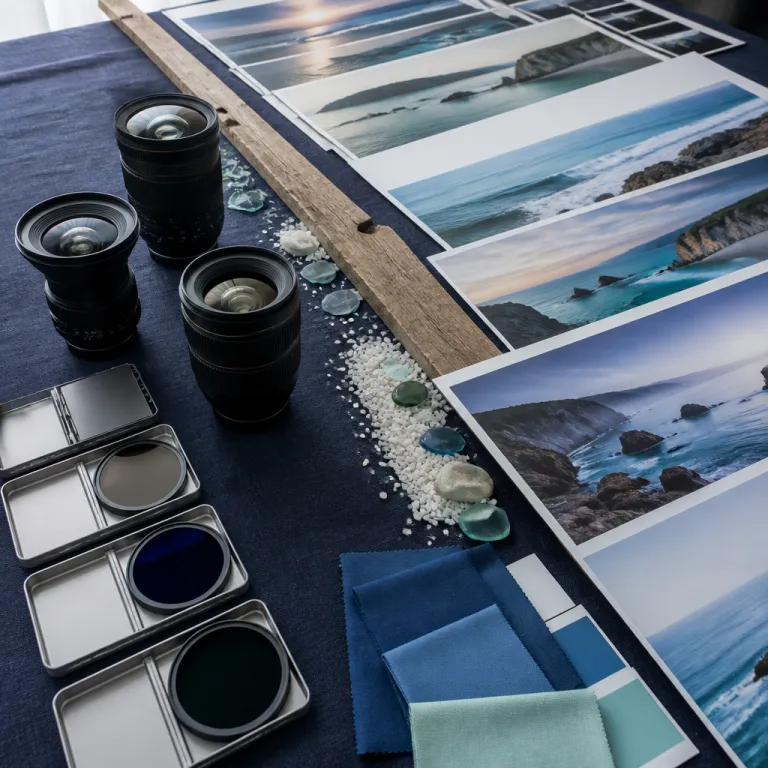
Why ef landscape photography lenses matter for digital luxury art
Luxury collectors now expect landscape photography to rival museum grade painting. When artists choose EF landscape photography lenses with care, every optic and every camera setting becomes part of a digital atelier that can stand beside hand finished canvases in a curated interior. The right Canon EF lens or Nikon F mount equivalent transforms a simple landscape into a collectible artwork with impeccable image quality.
For high end prints exceeding one metre, the choice of lenses defines how subtle tonal transitions appear. A full frame Canon EOS body paired with a flagship EF zoom or prime, such as the EF 16–35mm f/2.8L III USM or EF 24mm f/1.4L II USM, captures micro detail in rocks, foliage and clouds that luxury buyers notice immediately. When these landscapes are printed on archival cotton paper or metallic substrates, the precision of the focal length and the stability of the zoom range translate directly into perceived value.
Collectors often compare cameras and lenses the way connoisseurs compare grand cru vineyards. Canon cameras with L series lens options, fast USM autofocus and weather sealing give artists the confidence to keep shooting in demanding nature photography conditions where the light changes every second. That reliability lets the photographer work wide open or stopped down without fear, knowing that each image will support large format printing and refined digital retouching for luxury interiors.
Wide angle and ultra wide tools for immersive luxury landscapes
Immersive landscape photography for luxury interiors begins with a carefully chosen wide angle lens. On a full frame Canon EOS body, focal lengths between 14 millimetres and 24 millimetres create a super expansive field of view that suits grand alpine landscapes and dramatic coastal scenes. These ultra wide EF landscape photography lenses allow the artist to place foreground textures close to the camera while keeping distant mountains razor sharp.
Among Canon lenses, the best Canon options for this work often include a fast wide angle zoom with constant aperture and advanced coatings, such as the EF 16–35mm f/2.8L III USM or EF 11–24mm f/4L USM. Shooting slightly stopped down rather than fully wide open usually improves corner image quality, which matters when a print stretches across a three metre wall in a penthouse living room. Luxury collectors who already appreciate the quiet refinement of beautiful floral paintings in luxury interiors respond strongly to landscapes that show similar edge to edge clarity and tonal control.
Artists working with both Canon cameras and Nikon cameras often maintain parallel systems to access specific lenses and focal ranges. A best lens for one brand might be an ultra wide prime, such as a 20mm f/1.8, while another system offers a versatile wide angle zoom that suits both landscapes and nature photography commissions. In either case, the combination of lens, camera and shooting discipline determines whether the final image can be integrated seamlessly into a luxury artwork collection alongside sculpture, tapestry and limited edition prints.
From raw capture to digital artistry in luxury landscape photography
Once the scene is captured with EF landscape photography lenses, the real digital artistry begins in the studio. High resolution files from Canon EOS full frame cameras or comparable Nikon cameras provide enormous latitude for tonal sculpting, colour grading and local contrast adjustments. This post production phase is where a technically strong lens based landscape capture becomes a piece of luxury artwork tailored to a specific interior.
Curators commissioning bespoke landscapes for yachts or private residences often request multiple image versions from the same shooting session. One interpretation might emphasise cool tones and crisp micro contrast, while another uses softer colour palettes that echo the refined mood of an art flower print in luxury interiors. Because the original files come from best lens choices with excellent image quality, the artist can push these creative treatments without degrading fine detail or introducing artefacts that would be obvious at large scale.
Working with Canon lenses that feature advanced coatings and precise focal length calibration also reduces chromatic aberration and distortion, which simplifies the digital workflow. When the base image from the camera already shows clean lines and neutral colour, retouching time decreases and more attention can be devoted to artistic decisions rather than technical corrections. This synergy between Canon EF engineering and digital craftsmanship is what allows landscape photography to compete credibly with traditional painting in the luxury artwork market.
Balancing zoom, telephoto and prime lenses for collectible landscapes
Serious landscape artists building a luxury focused portfolio rarely rely on a single lens. They combine a wide angle zoom for sweeping vistas, a standard zoom for flexible shooting and a telephoto lens for compressing distant landscapes into graphic compositions. EF landscape photography lenses in the 70 to 200 millimetre focal range, such as the Canon EF 70–200mm f/2.8L IS III USM, are especially valuable for isolating patterns in mountains, dunes or forests that translate beautifully into large prints.
On Canon cameras, a high end telephoto zoom with fast USM focusing and image stabilisation offers both reach and precision. Shooting at longer focal lengths lets the artist simplify the landscape, removing visual clutter and emphasising rhythm, texture and light that appeal to sophisticated collectors. When paired with a full frame camera, these lenses also support nature photography that captures wildlife within the broader landscape, creating narrative series that sit well in curated collections.
Prime lenses still hold a special place in luxury oriented landscape photography because of their rendering character. A 24 millimetre prime used wide open at twilight can produce a subtle falloff and micro contrast that some collectors recognise across a consistent lens portfolio. Whether the artist works with Canon lens options or Nikon equivalents, the key is to understand how each focal length and optical design shapes the final image and how that image will live as a physical artwork in a specific architectural space.
Curating ef landscape photography lenses for luxury interiors
Galleries specialising in luxury artwork now curate landscape photography with the same rigour applied to sculpture or rare design objects. They evaluate not only composition and mood but also the technical pedigree of the cameras and lenses used, because these choices affect long term print stability and perceived sharpness. A series created entirely with Canon EOS full frame bodies and top tier Canon lenses, for example, signals a consistent standard that reassures discerning buyers.
When advising collectors, consultants often explain how focal length and shooting distance influence the emotional impact of a landscape in a room. A super wide angle view may feel expansive and liberating in a large salon, while a tighter telephoto composition can create an intimate, contemplative atmosphere in a study. Understanding which best lens combinations were used helps predict how the image will read from different viewing distances and how it will interact with other artworks, including sculptural pieces and symbolic works such as those explored in this analysis of the allure and symbolism of the gold menorah in luxury artwork.
Digital artists who plan for these curatorial needs often maintain detailed records of each camera, Canon EF lens model, focal range and aperture used for every artwork. This level of documentation, combined with limited edition control and archival printing, strengthens the provenance of the piece. It also demonstrates that EF landscape photography lenses are not just technical tools but integral components of the artwork’s identity within the luxury market.
Future directions in digital landscape artistry for luxury collectors
The next wave of luxury landscape photography will be defined by even closer integration between optical design and digital processing. As Canon cameras and Nikon cameras continue to refine sensor performance, EF landscape photography lenses and their successors will be optimised for both still images and high resolution motion work. Artists will increasingly create hybrid pieces where a single landscape exists as a static print, a subtle motion sequence and an interactive digital installation.
For collectors, this evolution means that understanding lens choice becomes part of understanding the artwork itself. A best Canon wide angle zoom used at a specific focal length for a panoramic seascape might also underpin a time based piece projected in an adjacent room, both derived from the same original shooting session. The continuity of lens, camera and image quality across these formats reinforces the coherence of a collection and supports long term value.
Nature photography will remain a central theme, but the way it is rendered will grow more nuanced. Artists will experiment with shooting wide open to create atmospheric series, then blending multiple exposures to achieve super detailed prints that still feel painterly. In this context, the choice of lens landscape tools, from ultra wide primes to compact telephoto zooms, will continue to shape how luxury audiences experience and invest in contemporary digital landscapes.
Key figures and technical benchmarks in luxury landscape photography
- High end full frame cameras from major brands now routinely offer resolutions between 45 and 60 megapixels, which supports gallery prints exceeding 150 centimetres on the long side without visible pixelation when paired with sharp lenses (for example, Canon EOS 5DS / 5DS R at 50.6 MP and Nikon D850 at 45.7 MP, according to manufacturer specifications).
- Laboratory testing by independent reviewers has shown that modern wide angle zoom lenses can maintain over 70% of their centre sharpness into the corners at landscape apertures around f/8, a critical factor for large luxury prints (as reported in MTF and field tests by sites such as DPReview and Optical Limits).
- Archival pigment prints on cotton rag paper, produced from files captured with high quality lenses and cameras, are often rated for display lifespans exceeding 100 years under controlled lighting, according to longevity testing published by major paper and ink manufacturers such as Hahnemühle and Epson.
- Image stabilisation systems in contemporary telephoto and standard zoom lenses commonly provide between four and six stops of compensation, allowing landscape artists to shoot handheld at slower shutter speeds without sacrificing image quality in low light, based on CIPA rated figures in lens specification sheets.
FAQ about ef landscape photography lenses in luxury artwork
Which EF lenses are most suitable for luxury landscape prints ?
For luxury scale landscape prints, artists typically favour ultra wide and standard zoom lenses with constant apertures, robust weather sealing and excellent corner sharpness. On full frame Canon EOS bodies, focal lengths between 14 millimetres and 35 millimetres cover most grand vistas, while a 70 to 200 millimetre telephoto zoom complements the set for more graphic compositions. Prime lenses at 24 millimetres and 35 millimetres are also popular for their distinctive rendering and high image quality.
How important is full frame for collectible landscape photography ?
Full frame cameras provide larger sensors that capture more detail and smoother tonal transitions, which become very noticeable in prints above one metre. When combined with high quality EF landscape photography lenses, full frame systems deliver files that withstand extensive post processing and large format printing without breaking down. Collectors and curators often view full frame capture as a technical baseline for top tier landscape artwork.
Do collectors care which brand of camera or lens was used ?
Most collectors focus primarily on the emotional and aesthetic impact of the image, but serious buyers and institutions increasingly pay attention to technical details. Knowing that a series was created with Canon cameras, Nikon cameras or other professional systems using top tier lenses reassures them about long term print quality and consistency. Detailed documentation of camera bodies, lenses and shooting parameters can therefore enhance the perceived authority and value of a landscape portfolio.
Is a zoom lens acceptable for high end landscape artwork ?
Modern zoom lenses, especially professional wide angle and telephoto zooms, can easily meet the standards required for luxury landscape prints. When used at optimal apertures and focal lengths, these lenses often match or approach the performance of primes while offering greater flexibility in the field. Many acclaimed landscape series in galleries today were created primarily with a small set of high quality zoom lenses.
How does lens choice influence digital post production possibilities ?
Lens choice directly affects how far an artist can push files in post production without degrading the image. Lenses with high resolving power, low distortion and good control of chromatic aberration produce cleaner raw files that tolerate extensive tonal and colour work. This technical headroom is essential when transforming a strong landscape capture into a refined luxury artwork tailored to a specific interior.
