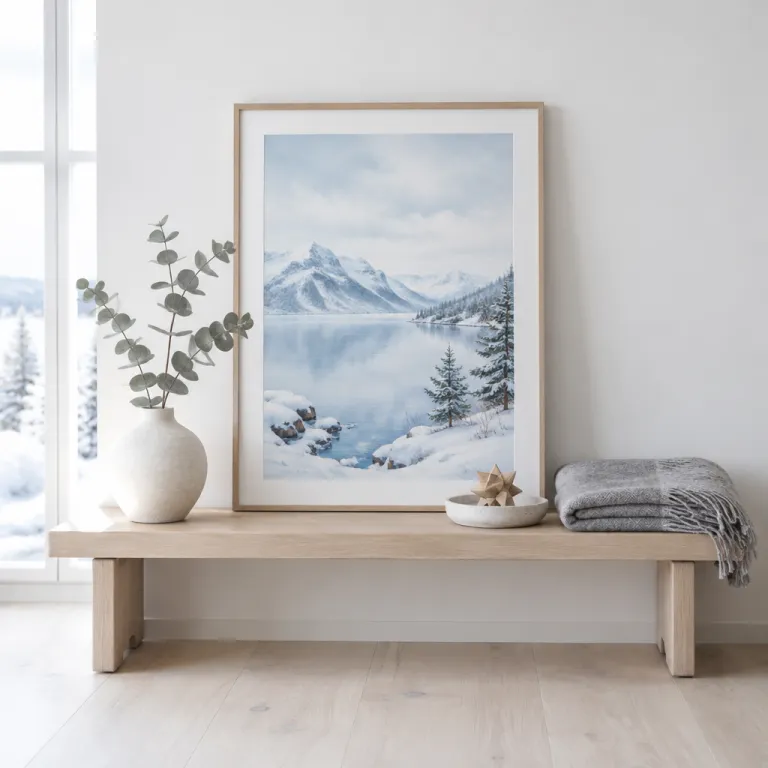
Luxury holiday art ideas for collectors
Luxury collectors increasingly treat festive décor as a curated seasonal exhibition rather than a quick decorative update. By approaching Christmas art, winter prints, and glass ornaments with the same discipline you apply to your year-round collection, each room can read as a private gallery that simply happens to be dressed for the holidays.
Transforming holiday art into a private gallery ritual
Holiday artwork in a luxury home starts with a clear curatorial vision. When you treat each seasonal display as a temporary exhibition, every wall and every view becomes part of a narrative that links art, Christmas, and personal heritage. A refined collector will use one statement piece of wall art to anchor the room, then add smaller works and cards as intimate details that reward close looking.
A single mixed-media canvas above a fireplace can echo the glow of a tree installation, while framed Christmas art prints on a sideboard create a quieter rhythm that balances the space. Aim for at least 12–18 inches of breathing room around the main piece so it reads as a focal point rather than another decoration. This approach turns festive décor into a serious art project, where each seasonal work is chosen for its dialogue with light, texture, and neighboring pieces rather than for a quick visual hit. When you think like an artist and not a decorator, every framed piece will feel intentional, from stained glass panels in a window to glass ornaments suspended in front of a large bay view.
Collectors who already own Impressionist work often integrate a reproduction of Claude Monet’s winter scenes as a subtle Christmas reference without slipping into cliché. A carefully framed Monet print in cool blues can sit opposite warm mixed-media Christmas art, creating a full chromatic tension that feels sophisticated rather than literal. This kind of varied pairing allows the seasonal theme to emerge gradually, so the room reads as a serious art space first and a festive setting second.
Designing DIY luxury holiday art projects for collectors
For luxury collectors, DIY art projects around Christmas and other winter holidays are less about saving on price and more about deepening engagement with the collection. A well-planned series of projects can transform leftover archival prints, unused frames, and even past exhibition cards into bespoke Christmas cards that echo the aesthetic of your main wall art. When you treat each card as a miniature piece of Christmas design, the act of sending mail becomes an extension of your curatorial voice.
One elegant project involves creating limited-edition cards using high-quality giclée prints of a favorite seasonal artwork, then hand-embellishing each piece with mixed-media details such as gold leaf, ink, or translucent overlays inspired by stained glass. These projects work beautifully for couples who already commission portrait sessions and can be paired with an intimate photography session using artful photo shoot concepts for collectors to generate imagery that feels consistent with the rest of the collection. The result is a full suite of Christmas art and cards that look at home beside museum-level framed work rather than like mass-produced stationery.
Families who collect can involve kids’ Christmas creativity without compromising luxury standards by assigning a dedicated arts-center-style table where children work on glass ornaments, small canvas studies, or collage experiments inspired by the main collection. Each child’s piece can be framed in a simple white or brass frame—often 8×10 or 11×14 inches works well—and rotated onto a secondary wall during the Christmas week period, so their work will share space with established artists in a respectful way. This practice not only nurtures the next generation of trained eyes but also turns the holiday into an annual salon where professional work and children’s experiments coexist.
Curating walls, light, and space for seasonal impact
Luxury seasonal displays succeed or fail on how they occupy space, not just on the individual piece. A collector may own extraordinary wall art, but if the lighting is poor or the works are crowded, the festive effect will feel more shop window than private gallery. The goal is to give each framed work enough breathing room on the wall so that the eye can move from piece to piece in a calm, deliberate rhythm.
Start by selecting one primary wall for your most important holiday canvas, then build outward with smaller prints and glass objects that echo its palette and mood. As a guideline, keep the center of the main work at roughly 57–60 inches from the floor and hang secondary pieces 2–4 inches apart. Picture lights with warm white LEDs (around 2700–3000K), adjustable track lighting at 30–35 degrees, and soft natural wash lighting, as outlined in this guide to lighting specifications for every artwork in the room, help you sculpt the view so that each work will reveal different details at different times of day. When you add reflective materials such as stained glass panels or polished mixed-media surfaces, the light itself becomes part of the seasonal composition.
Secondary walls can host a rotating salon-style hang of smaller Christmas prints, where guests can browse as if in a private arts center. This does not mean turning your home into a commercial sale space, but rather borrowing the clarity of gallery display to highlight varied works and limited-edition cards that might otherwise remain in storage. During the Christmas week period, you can even dedicate one wall to experimental work and quick studies, treating it as a living sketchbook that changes with each holiday.
Elevating christmas cards and paper works into collectible objects
For serious collectors, Christmas cards are rarely just seasonal greetings; they are opportunities to circulate art. When you commission an artist to design a limited run of cards based on a favorite winter motif, each card becomes a small collectible that reflects your taste and your existing wall art. Many luxury clients now archive one card from each year, framing the best piece and storing the rest in acid-free boxes as part of their long-term collection.
A refined approach is to treat Christmas stationery as an extension of your main collection, using the same paper stocks, color palettes, and typography that appear in your framed prints and catalogues. You might, for example, base a series of cards on a Claude Monet snow scene, then invite a contemporary artist to create mixed-media overlays that reference stained glass windows or tree lights. Over time, this builds a full visual timeline of your festive taste, which can be displayed in a narrow hallway or stairwell as a chronological wall of small works on paper.
Some collectors even stage a private, art-sale-style evening where guests can choose one card or small canvas study to take home, turning the act of giving into a curated experience. In such settings, clear labeling of each work—including title, artist, and notional price—reinforces the sense that every piece will be treated with the same respect as larger gallery works. This practice also encourages guests to view Christmas art and cards not as disposable décor but as part of a serious ecosystem of works on paper.
Balancing investment, price, and access in festive collections
Luxury collectors often ask how much of their annual art budget should be allocated to seasonal pieces versus long-term acquisitions. The answer depends on whether the winter work is treated as a separate category or as part of the same investment-grade strategy that governs the rest of the collection. When a holiday piece is a museum-quality canvas or glass sculpture by a blue-chip artist, it deserves the same due diligence on price, provenance, and condition as any other major work.
For more accessible festive pieces, many collectors appreciate the transparency of limited-edition prints with clearly stated edition sizes, certificates, and structured pricing. Online galleries that offer free shipping on framed wall art and mixed-media Christmas pieces can be useful for testing new artists, provided you maintain strict standards on print quality, archival materials, and return policies. Treat even a quick purchase of a small tree print as a serious acquisition by documenting the work, noting the sale terms, and recording where it hangs in your space.
Some high-end platforms now curate dedicated seasonal sections where you can filter by medium, from stained glass panels to collage, and by format, from large wall art to intimate cards. These platforms often run a Christmas-week promotion or a carefully curated sale, but the most discerning collectors focus less on discount and more on whether the work will hold its own beside existing pieces. Over time, a disciplined approach—such as allocating 5–10% of your annual art budget to festive acquisitions—ensures that your seasonal collection feels cohesive, considered, and worthy of its place on the wall all year.
Creating immersive festive experiences with people, photography, and narrative
Seasonal art in a luxury setting is not only about objects; it is about orchestrating an experience. When guests enter a room where the wall art, the tree ornaments, and even the kids’ Christmas creations all speak the same visual language, they feel as if they have stepped into a curated story. Every framed piece, from a Claude Monet reproduction to a contemporary mixed-media work, becomes a chapter in that narrative.
Photography plays a crucial role in this immersive approach, especially when you commission portraits that echo the mood of your existing winter artworks. A carefully staged session using elegant portrait poses for women in luxury art photography allows you to create images that sit comfortably beside your favorite canvas or glass sculpture. When these portraits are printed on fine art paper, framed with the same attention to detail as your other prints, and integrated into the festive display, the boundary between art and life begins to blur.
To maintain clarity for all visitors, especially on digital platforms, always provide a discreet option to skip content that is purely promotional and move directly to the core projects or collection highlights. This respect for the viewer’s time and attention mirrors the way a well-run arts center structures its exhibitions, guiding the eye from major wall art to smaller pieces without visual noise. In a private home, the same principle applies; you will curate pathways, sightlines, and even seating so that every view of your seasonal display feels intentional, calm, and quietly luxurious.
Key figures shaping luxury holiday art and collecting
- According to the Art Basel & UBS Global Art Market Report 2023, global art market sales reached approximately 67.8 billion dollars, with seasonal and thematic sales, including Christmas and winter-themed works, representing a growing share of online transactions.
- Data from the Hiscox Online Art Trade Report 2023 indicates that around 80% of new collectors have purchased at least one work of wall art or prints online, often starting with accessible holiday-themed pieces before moving into higher price segments.
- Surveys by major auction houses show that limited-edition prints and mixed-media works account for more than 50% of lots in many art-sale events during the Christmas week period, reflecting strong demand for festive pieces at varied price points.
- Consumer research from luxury retail analysts suggests that free shipping remains one of the top three decision factors for online buyers of framed wall art and glass pieces, especially when purchasing gifts or Christmas cards for international recipients.
- Studies of museum education programs reveal that kids’ Christmas workshops and family art projects can increase long-term engagement with institutions, with participants being significantly more likely to return to the arts center for non-seasonal exhibitions.
FAQ about luxury holiday art for collectors
How can I integrate holiday art without compromising my existing collection?
Start by identifying one or two walls where seasonal wall art can rotate in and out without displacing core masterpieces. Choose winter pieces that match the quality of your existing work in terms of framing, materials, and scale, then build around a central piece with smaller prints, cards, and mixed-media accents.
Are limited edition christmas cards worth collecting over time?
Limited-edition Christmas cards designed by established or emerging artists can become valuable ephemera, especially when produced on archival paper with clear edition numbers. Many collectors frame one card from each year and store the rest, creating a long-term record of their taste in Christmas art and seasonal design.
What mediums work best for high end festive displays?
For luxury interiors, a mix of canvas paintings, glass art, stained glass panels, and finely produced prints offers both depth and variety. Combining these mediums with carefully chosen lighting allows each piece to reveal different details throughout the holiday period.
How should I budget for seasonal acquisitions versus long term investments?
Many collectors allocate a small but consistent percentage of their annual art budget—often 5–10%—to seasonal work, treating it as a focused sub-collection. Major investment pieces, whether by Claude Monet or other blue-chip artists, remain the priority, while festive works are selected for strong design, craftsmanship, and compatibility with existing wall art.
Can children’s art projects be integrated into a luxury holiday display?
Yes, kids’ Christmas creations can be elevated by using quality materials, thoughtful framing, and a dedicated wall or niche. When children’s art projects are presented with the same respect as professional work, they add warmth and narrative without diminishing the overall luxury aesthetic.